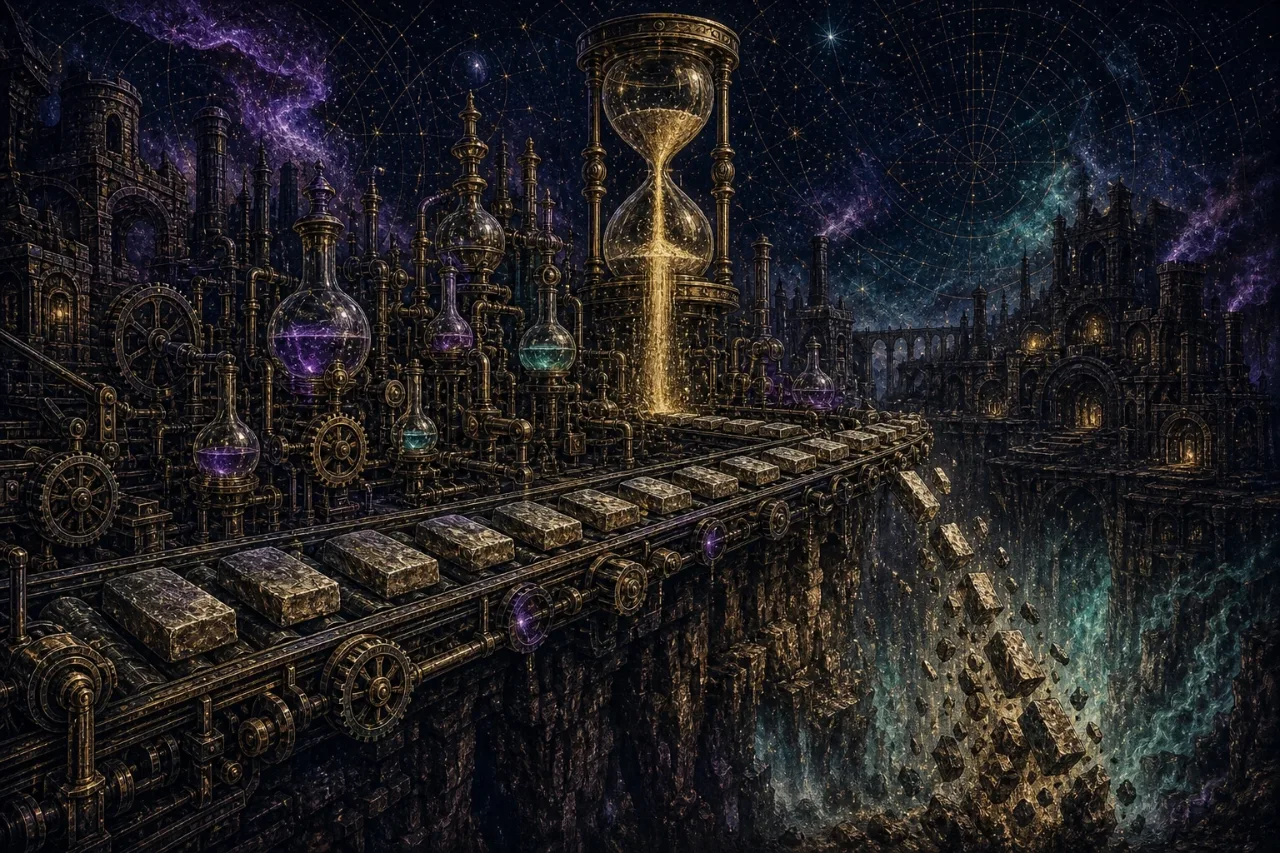
I read a piece on Hacker News this week that said the quiet part out loud: AI can make you suck faster too. No hedging, no caveats — just the observation that velocity and quality are different things, and AI has only ever promised the first one.
I've been writing code since 1986. I've watched half a dozen "this changes everything" waves come and go — 4GLs, CASE tools, offshore outsourcing, no-code, low-code, and now this. Every single one of them made it faster to build the wrong thing. AI is just the fastest version of that pattern yet.
Speed was never the bottleneck
Here's the thing that gets lost in all the excitement: most projects don't fail because typing code took too long. They fail because nobody was sure what to build, or why, or for whom. They fail because the feedback loop between "we shipped this" and "did it actually help anyone" was too slow or too vague to matter.
AI coding assistants are extraordinary at closing the gap between idea and implementation. They are completely indifferent to whether the idea was any good. Feed Claude or Copilot a half-baked spec and it will happily produce a fully-baked, syntactically flawless, thoroughly tested implementation of a mistake. It will do it in twenty minutes instead of two weeks. That's not progress. That's just a mistake with better production values.
I see this constantly in the Masher tools ecosystem. Someone builds an automation pipeline — RSSMasher pulling in content, an AI layer rewriting it, an output feed pushing it to ten platforms — and the whole thing runs beautifully. The problem is nobody checked whether the underlying content strategy made sense in the first place. Now you're not failing slowly and learning from it. You're failing at scale, instantly, across every channel you've automated.
Automation is an amplifier, not a compass
This is the distinction I keep coming back to. AI and automation amplify whatever direction you're already pointed in. If you're pointed at something genuinely useful — a real workflow problem, a real audience need — automation is transmutation in the proper alchemical sense. Raw effort in, gold out, at a pace that wasn't possible five years ago.
But if you're pointed at noise — content nobody wants, features nobody asked for, a business model that doesn't actually hold up — automation just gets you to the noise faster and in greater volume. You'll have shipped fifty variations of the wrong article before lunch. Article2Video will happily turn a bad script into a slick-looking bad video. The tool doesn't know the difference. It's not supposed to. That judgment call is still entirely yours.
The tell is in your review habits
If I had to give one practical piece of advice from four decades of this, it's this: the moment you introduce AI-assisted speed into any part of your workflow, your review discipline needs to go up, not down. That's counterintuitive, because the whole appeal of automation is doing less manual work. But less manual work in production has to be paid for with more rigour at the checkpoints — what are we building, why, and how will we know if it's wrong.
Practically that means:
- Keep a human decision gate before anything AI-generated goes live, not after.
- Measure outcomes, not output volume. Ten articles a day means nothing if none of them convert or rank.
- Build in a fast, honest feedback loop — real user data, not vibes — so a bad direction gets caught in days, not months.
- Resist the urge to treat "we shipped a lot this week" as a proxy for "we made good decisions this week."
Speed is a multiplier, choose your sign
None of this is an argument against using AI in your stack. I've built a business on the belief that automation, used well, is one of the best tools a small operator has ever had against companies ten times their size. But a multiplier works both ways. Multiply a good process and you get compounding gains. Multiply a bad one and you get compounding failure, delivered with impressive speed and a clean UI.
The Hacker News piece put it plainly, and it's worth sitting with rather than skimming past: the question was never "can AI help you go faster." Of course it can. The question is whether you'd trusted the direction you were heading in before you turned the throttle up. If you hadn't, all the automation in the world just gets you to the wrong place sooner.
Slow down long enough to check your direction. Then, by all means, hit the gas.
— Wayne